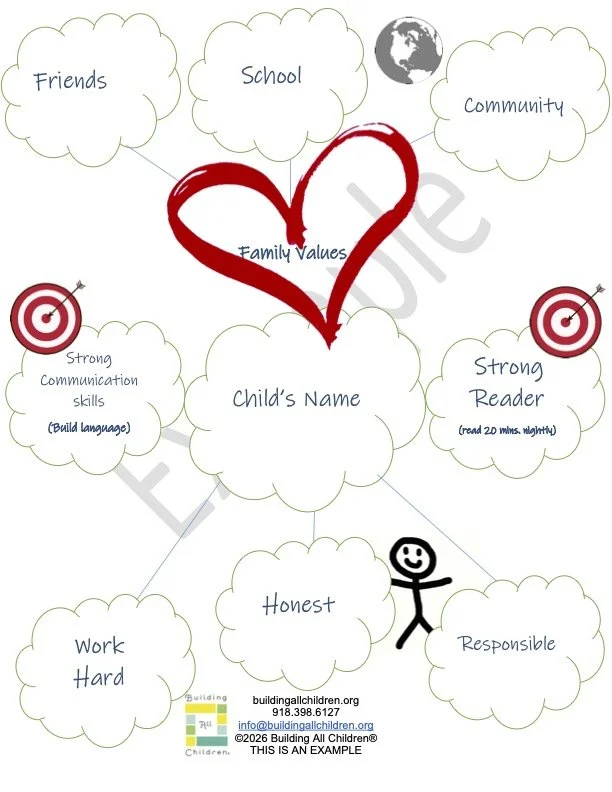
Before setting goals for your child, it’s important to zoom out and think about the whole child they are becoming, not just what they can do. Meaningful goals start with vision.
1. First: Mold Their Heart
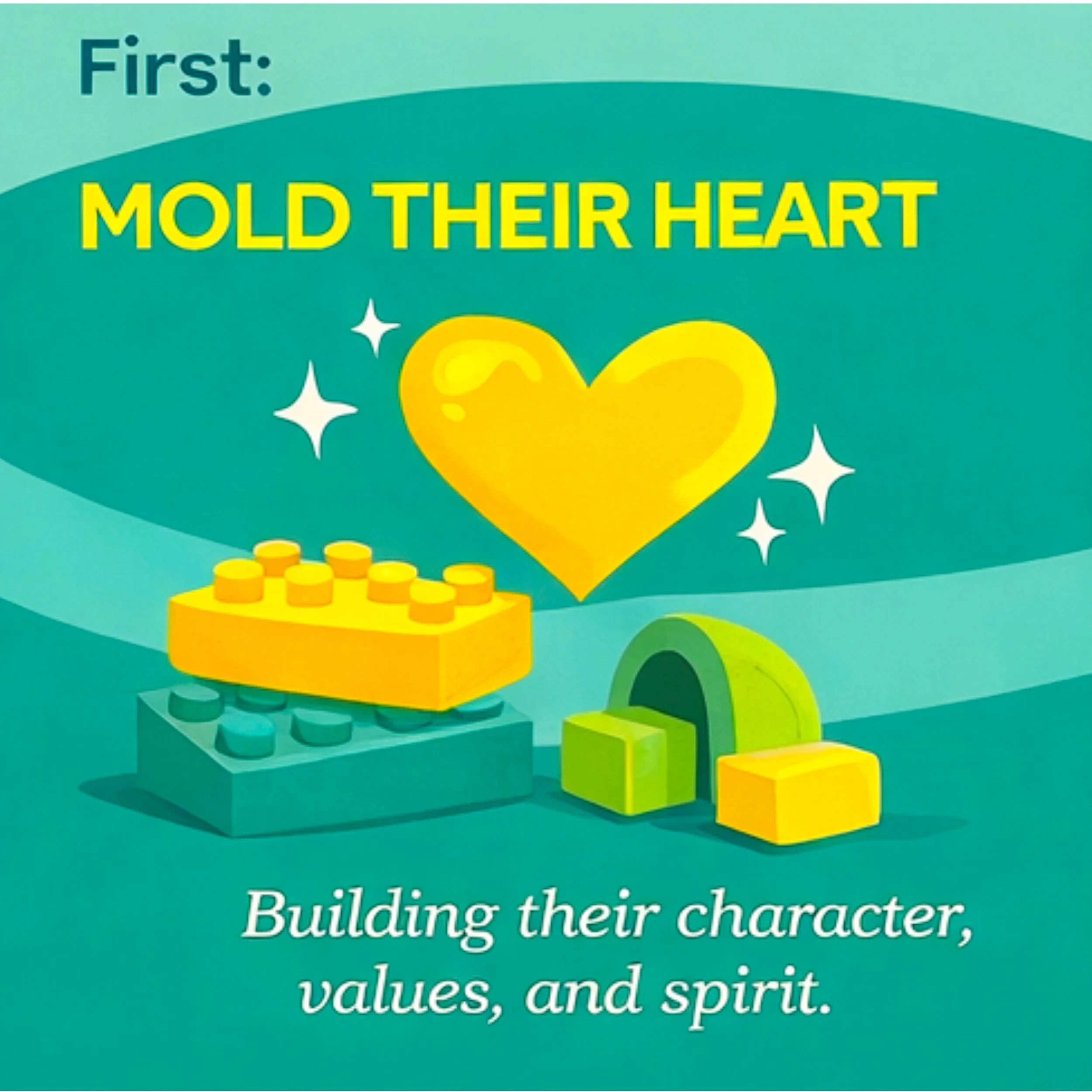
Everything begins with the heart.
Ask yourself:
• What kind of person do I hope my child becomes?
• What values do I want rooted deeply in their heart?
• How do we model love, faith, kindness, resilience, and integrity at home?
Heart goals shape children’s:
• Religion/Family Values
• Family Culture
• Treatment of others
• Response to challenges
• View of themselves and their purpose
Skills can be taught, but character is formed over time.
2. Think About Their World Consider the bigger picture of the world your child lives in and will grow into.

Reflect on:
• Friends – kindness, empathy, communication, loyalty
• Community – service, belonging, purpose, volunteering, church
• School – curiosity, perseverance, love of learning, teachers
• Work – responsibility, effort, leadership
• Future Spouse – husband, wife, marriage, relationships
Ask:
• How do I want my child to show up in these spaces?
• What skills and attitudes will help them thrive?
Choose a few core traits you want to intentionally nurture.
Examples include:
• Hard-working – giving effort even when things are difficult
• Empathetic – noticing and caring about others
• Passionate/Motivated – loving deeply and pursuing interests
• Confident/Competitive – believing in themselves and striving to grow
• Child of Integrity – adhering to moral principles and core values
• Honest – being straightforward and trustworthy in all interactions
• Responsible – taking responsibility for one’s actions
• Courageous – willing to face danger or difficulty without fear
• Respectful – treating others with dignity and consideration
• Resilient – able to recover quickly from setbacks or hardship
Focus on progress, not perfection.
3. Core Character Traits
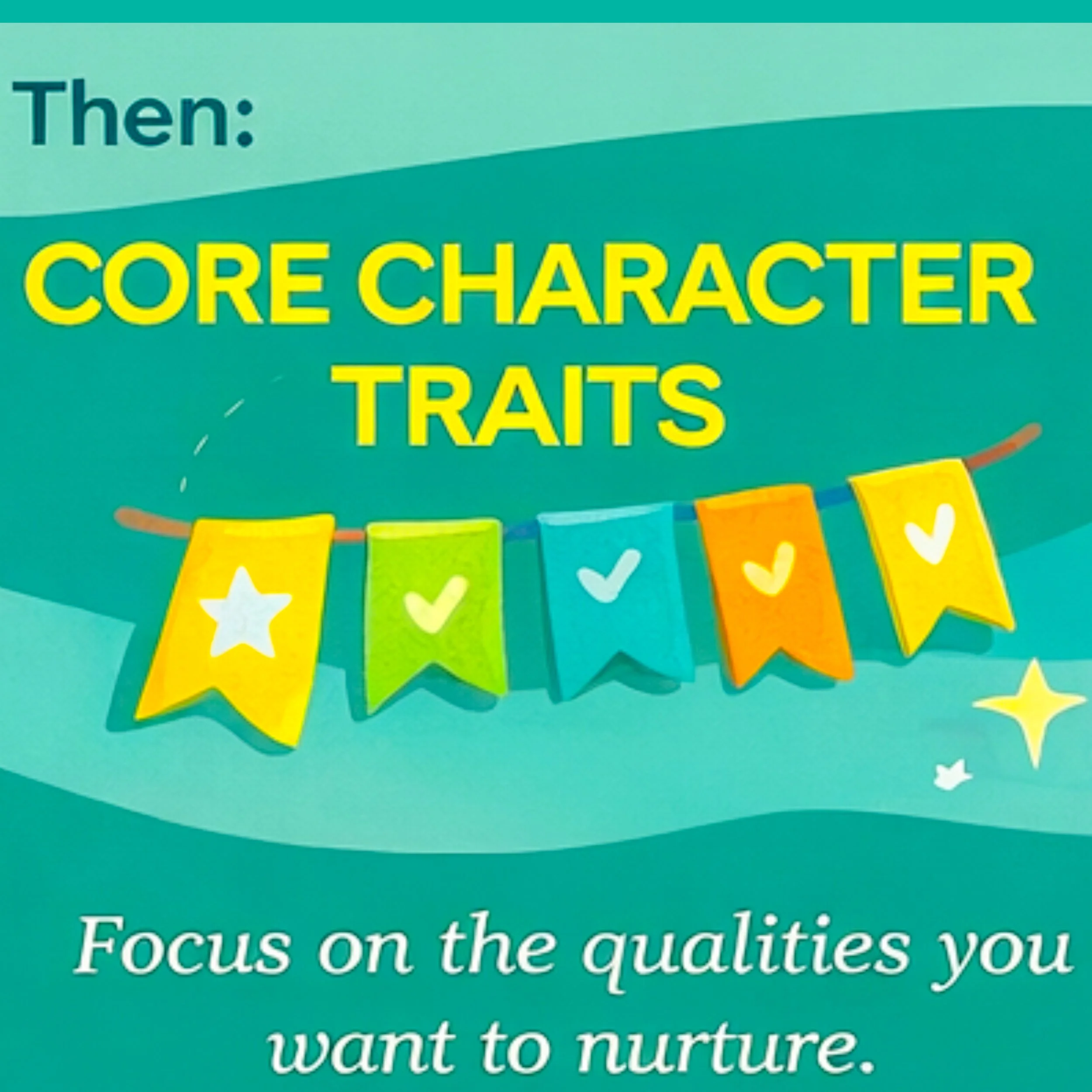
Choose a few core traits you
want to intentionally nurture!
Focus on progress,
not perfection!
Examples include:
• Hard-working – giving effort even when things are difficult
• Empathetic – noticing and caring about others
• Passionate/Motivated – loving deeply and pursuing interests
• Confident/Competitive – believing in themselves and striving to grow
• Child of Integrity – adhering to moral principles and core values
• Honest – being straightforward and trustworthy in all interactions
• Responsible – taking responsibility for one’s actions
• Courageous – willing to face danger or difficulty without fear
• Respectful – treating others with dignity and consideration
• Resilient – able to recover quickly from setbacks or hardship
Focus on progress, not perfection.
4. Set Personal Goals (smaller goals)
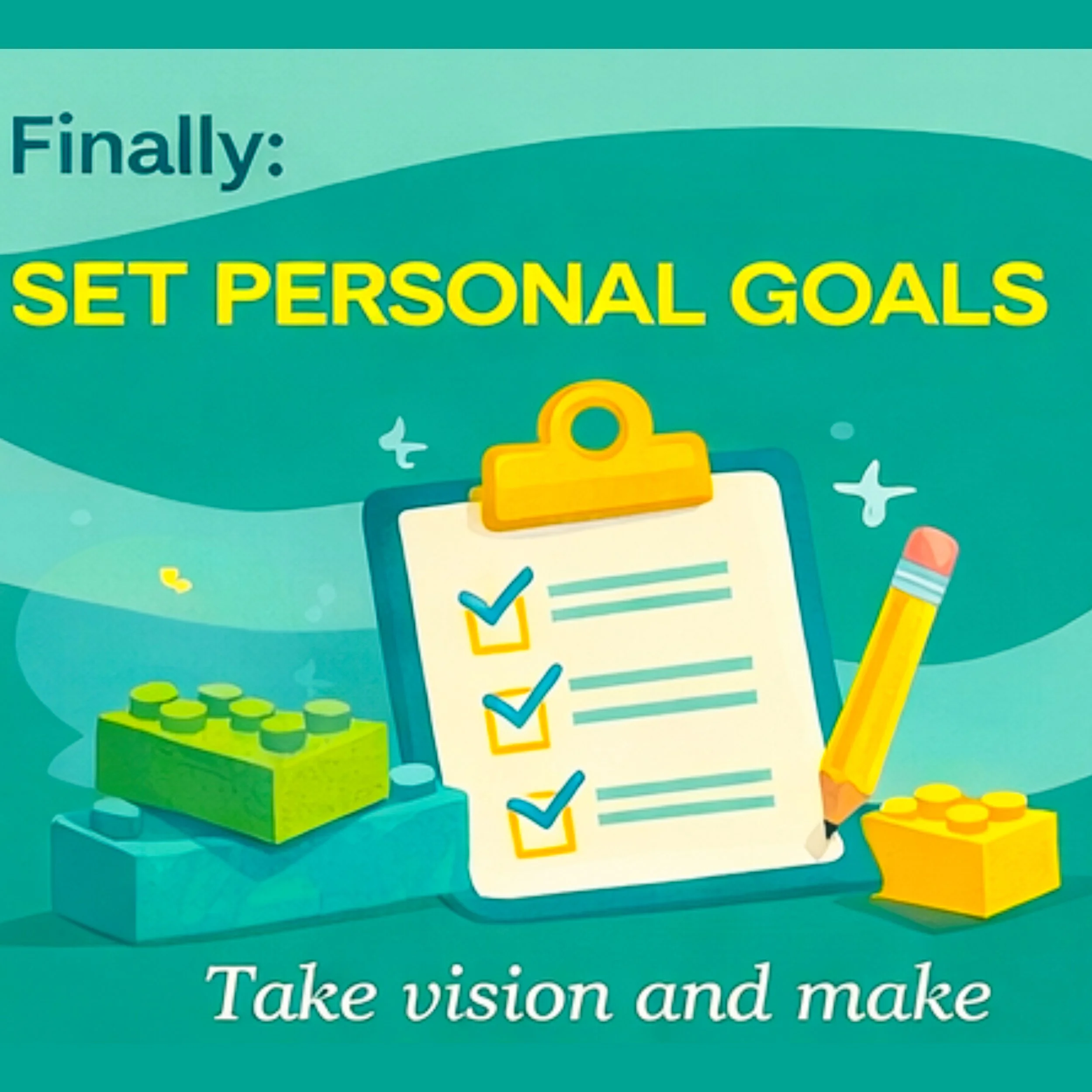
Now translate your vision into personal, age-appropriate goals.
Effective goals:
• Match your child’s developmental stage
• Support specific milestones
• Support emotional, social, and learning growth
• Are flexible and revisited often
• Encourage good teammate, sports, piano, dance, etc.
Remember- When parents zoom out, goals become more meaningful. You’re not just shaping skills you’re shaping hearts, character, and a future. Small, intentional steps today BUILD the person your child is becoming tomorrow.
GOAL SETTING CHARTS FOR YOUR CHILD

Here is an example of a filled in goal chart to help you get started help BUILDing intention goals for your child!